
Your Rights Matter: Navigating the Grievance Redressal Mechanism Under NCRP-CFCFRMS
⏱️ 5 min read
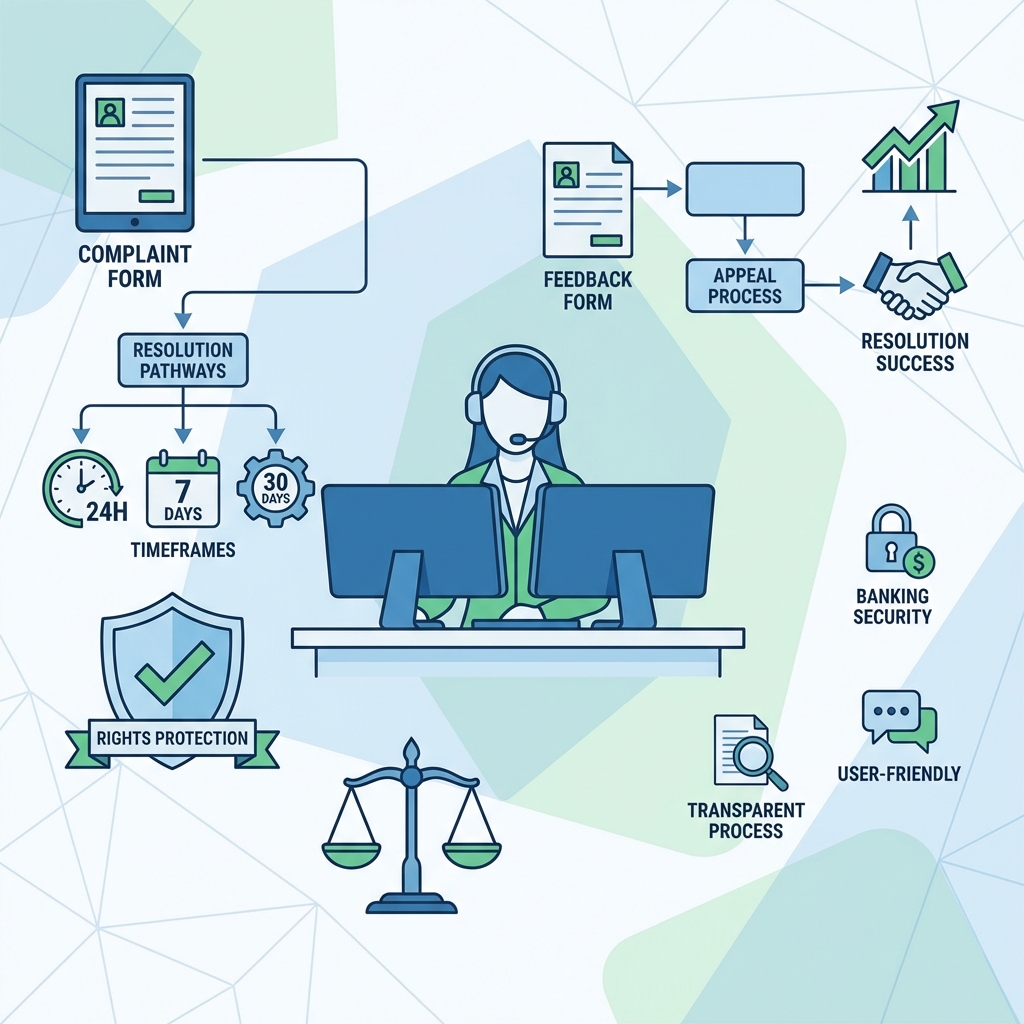
What happens when your bank account is wrongly flagged in a cybercrime investigation? When digital banking services are suspended without your knowledge? When funds are held that you desperately need? The Grievance Redressal Mechanism under NCRP-CFCFRMS provides structured, time-bound processes to address these situations—but only if you know how to navigate them.
The Foundation: Why Grievance Redressal Matters
The CFCFRMS framework gives law enforcement powerful tools to freeze accounts and halt transactions in the fight against cyber-enabled financial crimes. With ₹7,647 Crore prevented from reaching cybercriminals, the system's effectiveness is undeniable. However, this power creates risks for innocent account holders whose accounts may be:
- Compromised without their knowledge ("money mule" scenarios)
- Wrongly flagged due to legitimate business transactions
- Caught in the crossfire of cybercrime investigations
- Subject to prolonged holds affecting their livelihood
The Grievance Redressal Mechanism exists to balance crime prevention with the protection of fundamental rights—particularly the Right to Livelihood and Right to Privacy. It establishes clear timelines, designated officers, and structured appeal processes to ensure no one is left without recourse.
The Institutional Framework
Designated Grievance Officers
The SOP mandates a multi-tier grievance redressal structure:
- State/UT-Level Grievance Officers: Of the rank of ADG, IG, or DIG
- District-Level Grievance Officers: Of the rank of Addl. SP or Dy. SP
- Bank Central and State-Level Officers: As per internal policies
- Branch-Level Officers: Who raise grievances on behalf of affected persons
Critically, all States, UTs, Banks, and Financial Intermediaries must inform the Indian Cyber Crime Coordination Centre (I4C) about their mechanisms and designated officers within one month of the SOP's publication.
Online Grievance Redressal Module
An Online Grievance Redressal Module will be operationalized as part of NCRP-CFCFRMS, providing a centralized platform for submitting, tracking, and resolving grievances. This digital infrastructure ensures transparency and accountability throughout the process.
Process 1: Grievances for Amounts Put on Hold
If your account has an amount on hold (as opposed to full suspension or seizure), the following structured process applies:
Step 1: Approach Your Bank (Within 7 Days)
The affected person must approach the bank branch where the account exists or any other designated branch. The bank will:
- Undertake Customer Due Diligence (CDD) as prescribed in RBI circulars
- Review justifications submitted by the person
- Exercise Enhanced Due Diligence (EDD)
- If convinced about the transaction's bona fides, submit the grievance to CFCFRMS with necessary justifications
Critical Timeline: Banks must submit the grievance within 7 calendar days from the day the aggrieved person complains. This is the first accountability checkpoint.
Step 2: Assignment to Investigating Officer (IO)
The grievance is assigned by the concerned Station House Officer (SHO) to the IO or Police officer under intimation to the District Grievance Officer. If there are multiple holds, the grievance goes to all concerned IOs.
Step 3: Verification Process (Preferably via Video Conference)
The IO shall issue a notice (physical or electronic) to the account holder to appear for verifications, preferably through video conference. A representative of the aggrieved person's bank branch may also be included.
Important Protection: Account holders should not be called to appear in person before the IO unless deemed unavoidable during investigation and an FIR/e-FIR is issued. Video conferencing should be the default method.
For verifications, IOs may take assistance from the Police Station in the area where the account holder resides using the CIAR module of the Samanvaya Platform.
Step 4: Decision Within 15 Days
The IO has 15 calendar days from receipt of the grievance to take action:
- If Satisfied: Direct the bank to remove the hold and update the Grievance Redressal Module
- If Not Satisfied: Submit remarks on the module with reasons, which will be communicated to the account holder via SMS/email
Step 5: Automatic Escalation if No Response
If the IO doesn't address the grievance within 15 days, the grievance is automatically notified to the District Grievance Officer on day 16. This automatic escalation is a critical safeguard against bureaucratic delays.
Step 6: Review Request (Within 15 Days of Decision)
If the account holder is not satisfied with the IO's orders, they may file a review request within 15 calendar days by visiting the designated bank branch. The District Grievance Officer will:
- Review details submitted and reasons offered by the IO
- May seek additional information from banks (banks must respond within 2 days)
- Pass appropriate instructions to the IO
- Update decision on the Grievance Redressal Module within 15 calendar days
The IO must then take action and update the portal within 2 calendar days.
The 90-Day Automatic Release Provision
Here's a powerful protection often overlooked: if no lawful directions regarding continuation or discontinuation of the hold are received within 90 calendar days of the grievance being submitted, specific procedures activate:
- Within 15 days before the 90-day expiry, the bank intimates the concerned LEA for removal of the hold
- An SMS is sent to the concerned SHO through NCRP
- If the amount is not required in any other case, no court petition exists, and there's no LEA request for extension, the bank shall remove the hold
IOs may request an extension for up to 90 additional calendar days if necessary during investigation.
Process 2: Grievances for Suspension or Seizure
When digital banking services are suspended or accounts are seized (not just amounts put on hold), the process is similar but with key differences:
Legal Authority Required
Directions for seizure or suspension must be given under Section 106 BNSS or other extant laws. This higher bar reflects the more severe impact on account holders.
Same Initial Steps (7 Days for Bank Submission)
The person approaches the bank, which conducts CDD/EDD and submits the grievance within 7 calendar days if convinced of bona fides.
Assignment to Multiple Officers
The grievance is assigned to the IO issuing the directions and also notified to State and District Grievance Officers. If multiple directions exist, all issuing officers are involved.
Partial Relief Possible
If satisfied with verifications, the IO may direct the bank to:
- Release the seized account, OR
- Enable digital banking facilities while keeping the reported amount on hold
This nuanced approach allows restoration of banking services while maintaining necessary controls on disputed amounts.
Three-Tier Appeal Structure
For seizure/suspension cases, a robust three-tier structure exists:
- First Level: IO or Police Officer (15 days)
- Second Level: District Grievance Officer (15 days from notification)
- Third Level: State Grievance Officer (15 days from being notified of appeal)
At each level, aggrieved account holders may appeal within 15 calendar days of receiving the decision. The State Grievance Officer or designated officer reviews details, may seek additional case information, and assesses the need for continued action.
Special Protection: Victim Account Seizures
A unique provision addresses cases where the victim's own bank account is seized —either erroneously or as a preventive measure at the victim's own request to prevent further loss. In such situations:
- On the victim's request, the bank shall release the account if it doesn't violate lawful directions
- If the victim's account has complaints on CFCFRMS, CDD may be conducted as prescribed
This recognizes that victims should not be further victimized by protective actions taken in their interest.
Who Can Raise a Grievance?
The SOP explicitly provides that grievances can be raised by:
- Any aggrieved account holder
- Any person on behalf of a Senior Citizen account holder who is not capable of visiting the branch physically
- Any person on behalf of a specially-abled account holder incapable of visiting the branch physically
- Any person on behalf of an account holder suffering from terminal illness who is incapable of visiting the branch physically
This inclusive approach ensures vulnerable populations are not denied access to grievance redressal.
The Ultimate Safeguard: Judicial Review
Beyond the administrative grievance mechanism, the SOP explicitly preserves the right to judicial review:
"Any account holder or any other person on her behalf, aggrieved by the decision of any Grievance Officer, at any point of time, may approach the jurisdictional Court for restoration of digital banking services or unfreezing of the said account."
This constitutional safeguard means that no administrative decision is final—the courts remain the ultimate arbiter of rights and remedies.
Critical Timelines at a Glance
Understanding timelines is crucial for effective use of the grievance mechanism:
| Action | Timeline |
|---|---|
| Bank to submit grievance after complaint | 7 calendar days |
| IO/Police Officer to decide on grievance | 15 calendar days |
| Account holder to file review request | 15 calendar days from decision |
| District Grievance Officer to decide on review | 15 calendar days |
| Appeal to State Grievance Officer | 15 calendar days from District Officer decision |
| State Grievance Officer to decide | 15 calendar days |
| Banks/FIs to furnish requested information | 2 calendar days |
| Automatic release consideration (if no directions) | 90 calendar days from grievance submission |
Practical Considerations
Documentation is Critical
When approaching your bank with a grievance, bring comprehensive documentation:
- Identity proof and KYC documents
- Transaction records and bank statements
- Evidence of legitimate business or personal transactions
- Correspondence with parties involved in flagged transactions
- Any other materials demonstrating bona fides
Cooperate with Enhanced Due Diligence
Banks conducting EDD may request additional information or documentation. Full cooperation expedites the process and demonstrates good faith.
Track Your Grievance
Once submitted through the Online Grievance Redressal Module, monitor your grievance status regularly. The system provides transparency through each stage of the process.
Don't Miss Deadlines
The 15-day windows for filing reviews and appeals are strict. Missing these deadlines may foreclose your administrative remedies, leaving only judicial review as an option.
Conclusion: Rights Protected, Remedies Available
The Grievance Redressal Mechanism under NCRP-CFCFRMS represents a carefully calibrated balance between empowering law enforcement to combat cybercrime and protecting the fundamental rights of citizens. Through designated officers, strict timelines, automatic escalations, and preserved judicial review, the framework ensures that no one affected by preventive actions is left without recourse.
For account holders caught in the system—whether through account compromise, mistaken flagging, or legitimate business transactions—understanding these processes is the difference between prolonged financial hardship and timely restoration of rights. The mechanisms exist; the key is knowing how to activate them.
As cyber-enabled financial crimes continue to evolve, so too must the balance between security and liberty. The grievance redressal mechanism is not a hindrance to crime prevention—it is the essential complement that ensures the system remains just as well as effective.
📄 Access the Complete Official Document
Download the full Standard Operating Procedure (SOP) for NCRP-CFCFRMS, Custody, Restoration of Money and Grievance Redressal issued by the Ministry of Home Affairs dated 02.01.2026.
📥 Download DBAG SOP.pdf (1.45 MB)Need Assistance with Grievance Redressal?
Our practice provides specialized legal representation for navigating the CFCFRMS grievance redressal mechanism. We assist with documentation, EDD cooperation, administrative appeals, and judicial review when necessary. If your account has been wrongly flagged or you're facing unwarranted holds or suspensions, we can help protect your rights and restore your access to banking services.